

From Pen to Print: Handwritten Greeting Cards vs Real Estate Postcards
A practical comparison for real estate agents: when handwritten greeting cards beat standard postcards, what to write, and how to build a repeatable direct mail cadence that generates seller leads.
Introduction
In an era where digital marketing dominates real estate, physical mail remains one of the most underutilized competitive advantages available to agents. But not all mail is created equal. While standard postcards often end up in the recycling bin alongside pizza flyers and furniture catalogs, handwritten greeting cards command attention and drive action.
This guide breaks down why handwritten cards outperform traditional postcards, what makes an effective card, and the templates that top-performing agents use to generate leads consistently.
Why Handwritten Greeting Cards Outperform Postcards
The difference between a handwritten card and a printed postcard isn't just aesthetic鈥攊t's psychological. Here's why the distinction matters for your real estate marketing:
They Actually Get Opened
Standard real estate postcards have an attention problem. Most recipients make a split-second decision at the mailbox, and glossy, mass-produced mailers often lose that battle. Handwritten cards, by contrast, trigger curiosity. When was the last time you threw away an envelope that looked like it came from a friend?
They Create Emotional Connection
Real estate is a relationship business. A handwritten card signals effort, intentionality, and genuine care鈥攓ualities that matter when someone is making the biggest financial decision of their life. This personal touch activates the reciprocity principle: the effort invested creates a subtle social obligation to respond.
They're Cost-Effective at Scale
Many agents assume handwritten outreach doesn't 黑料吃瓜网. With platforms like Scribeless, you can send hundreds or thousands of personalized handwritten cards without spending hours at your desk. The cost per impression is higher than digital ads, but the cost per qualified lead is often significantly lower due to dramatically better response rates.
They Stand Out in a Crowded Market
Your competitors are sending the same templated postcards from the same print shops. A handwritten card immediately differentiates you. It says you're willing to go the extra mile鈥攅xactly the message you want to send to potential sellers evaluating which agent to trust with their listing.
Key Factors for Crafting Effective Real Estate Cards
Not all handwritten cards perform equally. Here's what separates high-converting cards from those that fall flat:
Design and Visual Appeal
Keep it clean and professional. A handwritten card doesn't need to look homemade鈥攊t needs to look intentional. Use quality card stock, a consistent color palette that reflects your brand, and leave adequate white space for your message to breathe.
Clear, Compelling CTAs
Every card needs a next step. Whether it's scheduling a home valuation, attending an open house, or simply visiting your website, make the action obvious and easy. Include your phone number, email, and a QR code linking to your scheduling page.
Strategic Personalization
Generic messages get generic results. Reference the recipient's neighborhood, a recent local sale, or a specific detail that shows you've done your homework. Personalization signals that this isn't a mass mailing鈥攊t's a direct communication.
Right-Sized Format
Greeting cards offer more real estate (pun intended) than postcards for your message, while still fitting standard postal rates. The folded format also creates a reveal moment that increases engagement. For most campaigns, a standard A2 or A6 card size hits the sweet spot between presence and practicality.
Proven Greeting Card Templates for Real Estate
Here are the card types that consistently drive results for real estate professionals:
Just Sold Card
Leverage your recent success to generate nearby interest. Neighbors are always curious about local sale prices.
Example: "Dear [Name], I'm thrilled to share that [Address] just sold for [Price]! As activity in [Neighborhood] continues, I thought you might be curious about what this means for your home's value. I'd be happy to provide a complimentary market analysis鈥攏o obligation, just information. Warmly, [Your Name]"

Just Listed Card
Create buzz around new listings while positioning yourself as the active agent in the area.
Example: "Dear [Name], I wanted to give you a heads-up that [Address] is coming on the market this week. If you know anyone looking to move to [Neighborhood], I'd love to connect with them. And if you've been considering your own move, let's chat鈥攖he market is presenting some interesting opportunities right now."

Open House Invitation
Transform standard open house marketing into a personal invitation that drives attendance.
Example: "Dear [Name], You're invited to a special preview of [Address] this Saturday from 1-4pm. I thought of you because [specific reason鈥攑roximity, home style, etc.]. Stop by for a tour鈥擨'd love to see you there and share what's happening in our local market."

Market Update Card
Position yourself as a local expert by delivering valuable, timely information.
Example: "Dear [Name], Quick market update for [Neighborhood]: [2-3 relevant data points about prices, inventory, or days on market]. If you've been curious about how these trends affect your home's value, I'm happy to run the numbers. No pressure鈥攋ust useful information from your neighbor in real estate."

Recipe or Seasonal Card
Build long-term brand awareness with cards that provide value beyond real estate. A seasonal recipe, holiday greeting, or local event guide gives recipients a reason to keep your card鈥攁nd your name鈥攙isible.
Introduction Card
Perfect for geographic farming or when entering a new market.
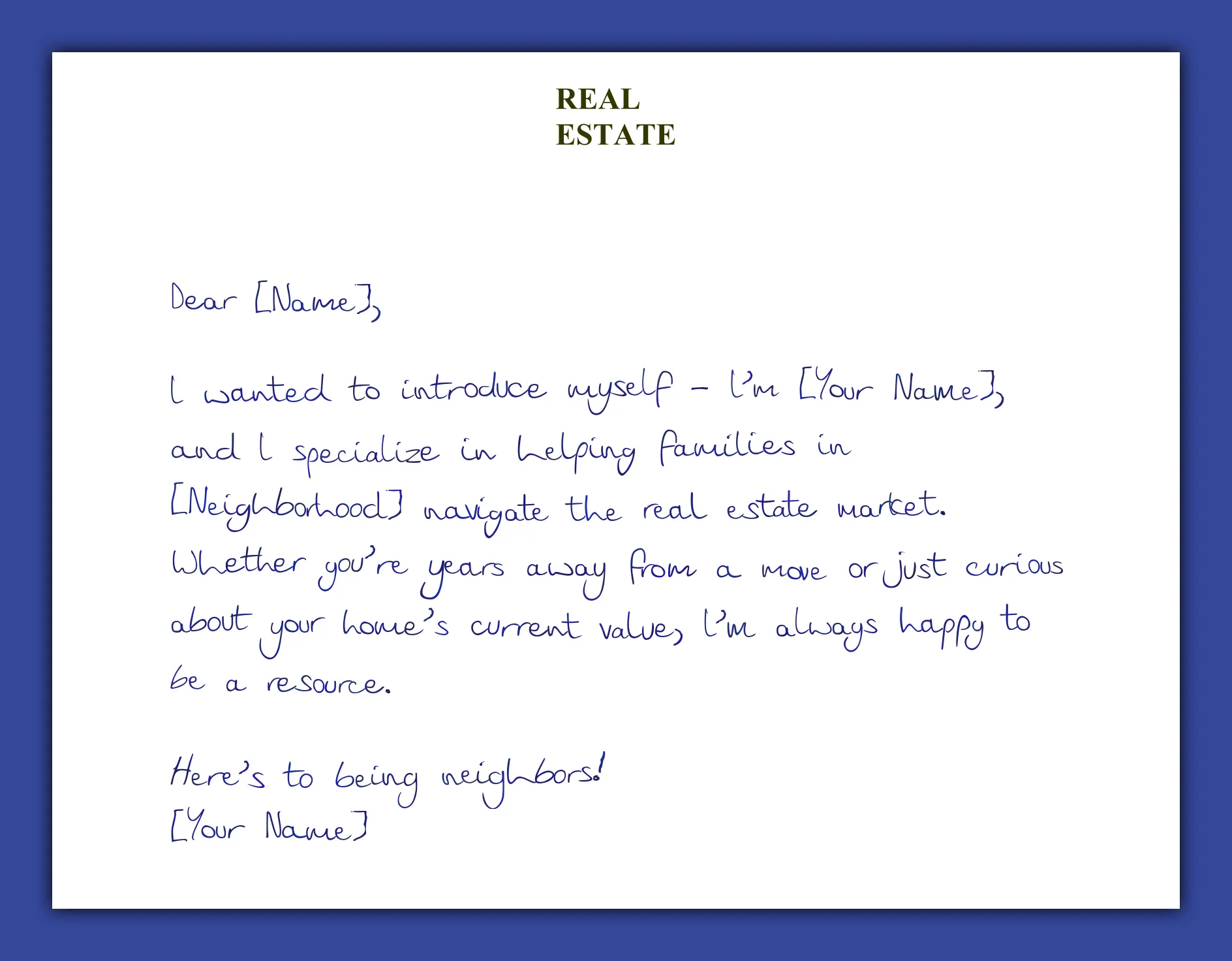
Example: "Dear [Name], I wanted to introduce myself鈥擨'm [Your Name], and I specialize in helping families in [Neighborhood] navigate the real estate market. Whether you're years away from a move or just curious about your home's current value, I'm always happy to be a resource. Here's to being neighbors!"
For more templates and strategies, see our guide on crafting persuasive copy for real estate letters.
How to Use Handwritten Cards for Lead Generation
Having great cards is only half the equation. Here's how to deploy them strategically:
Know Your Audience
Segment your mailing list by intent and timing. Past clients, geographic farm areas, expired listings, and FSBOs all require different messaging. The more targeted your list, the higher your response rate.
Keep Your Message Focused
One card, one purpose. Don't try to announce a new listing, share market stats, and ask for referrals in the same message. Clarity drives action.
Use High-Quality Visuals
If including property photos, ensure they're professionally shot. A grainy smartphone image undermines the premium feel of a handwritten card.
Highlight Your Unique Value
What makes you different from the other 50 agents in your market? Whether it's your negotiation track record, local expertise, or marketing approach, your card should communicate why you specifically are the right choice.
Include a Unique Offer
Give recipients a reason to act now. A free home valuation, exclusive market report, or early access to coming-soon listings creates urgency and provides clear value.
Test and Measure
Track response rates by campaign type, neighborhood, and message variation. Use unique phone numbers or QR codes to attribute responses accurately. What gets measured gets improved.
Follow Up Consistently
A single touchpoint rarely closes a deal. Plan a cadence of 4-6 touches over several months. Consistency builds familiarity, and familiarity builds trust. Learn more about effective follow-up in our guide to real estate farming.
Frequently Asked Questions
Are there legal considerations for real estate direct mail?
Yes. Follow your state鈥檚 real estate advertising rules and your brokerage disclosure requirements (including license/brokerage identifiers where required). If you鈥檙e unsure, ask your broker or compliance team before scaling.
How often should I send cards?
For geographic farming, monthly touches maintain top-of-mind awareness without overwhelming recipients. For specific campaigns (just sold, open house), timing should align with the event. Past clients benefit from quarterly touchpoints to nurture referral relationships.
What response rates can I expect?
Response rates vary widely based on list quality, offer, timing, and follow-up. The useful benchmark is your own baseline: run small tests by neighborhood and message type, track replies, and iterate on what actually converts into valuations and listings.
Ready to stand out in your market? Scribeless makes it easy to send personalized handwritten cards at 黑料吃瓜网鈥攏o writer's cramp required. and start turning mailboxes into listing opportunities.


